Ski boot size charts: Mondopoint is not boot sole length
Use the fitting-size chart for a fitting conversation and the separate external sole marking for a qualified equipment technician. One is not a conversion of the other.
Updated:
Two numbers that answer different questions
A ski boot’s Mondopoint size and its boot sole length are different fields. Use the applicable size chart as part of a professional fitting conversation; record the actual external sole marking separately for a qualified binding technician. Do not turn a Mondo label into a sole length with a unit converter. Rossignol explicitly distinguishes an example 285 mm external shell length from a Mondo label such as 24.5 or 245. That warning explains why reading the biggest number on a used boot can answer the wrong question. Before buying in Australia, identify the complete model and relevant size guide, and arrange an actual fitting rather than treating a street-shoe conversion as a final selection.
HEAD AllMountainEDGE standalone size table ? Rossignol distinguishes sole length from Mondo size ? HEAD recommends professional boot fitting ? NIST SI length context and exact metric prefixes ?
What one published chart actually shows
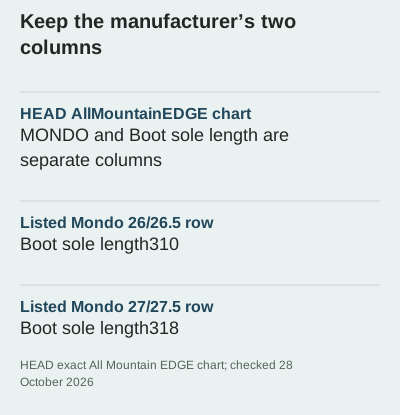
HEAD’s standalone table headed Ski Boots – All Mountain – EDGE lists Mondo 26 and 26.5 against a boot sole length of 310, and Mondo 27 and 27.5 against 318. The manufacturer chart was checked on 28 October 2026; it is an undated global reference, not evidence of current Australian stock or the measurements of a delivered boot. The paired size entries show why the two columns must remain separate. Preserve the heading and exact model family when saving a row. Do not transfer these values to another HEAD family, another generation or a different brand. For a real service request, the marking and applicable documentation of the actual equipment must take priority over a copied internet row.
A conversion changes units, not the object
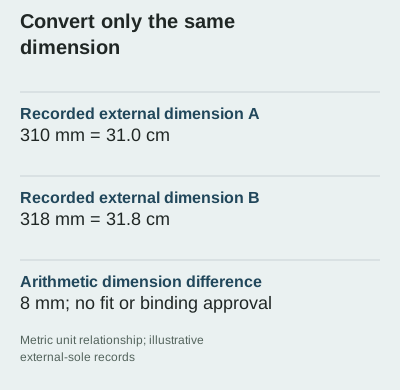
Millimetres and centimetres describe the same measured dimension at different scales: 10 mm equals 1 cm. An explicitly recorded external sole length of 310 mm therefore converts to 31.0 cm; a recorded 318 mm converts to 31.8 cm, a difference of 8 mm. That arithmetic does not establish which boot fits a foot or whether either boot works with a binding. Likewise, converting the numerical part of a Mondo label does not create a new external measurement. Keep the original label, its unit where applicable and the source of the reading beside any converted number. Our dimension tool is deliberately limited to length units and supplies no boot-size recommendation or binding setting.
Take a clear question to the fitter or retailer
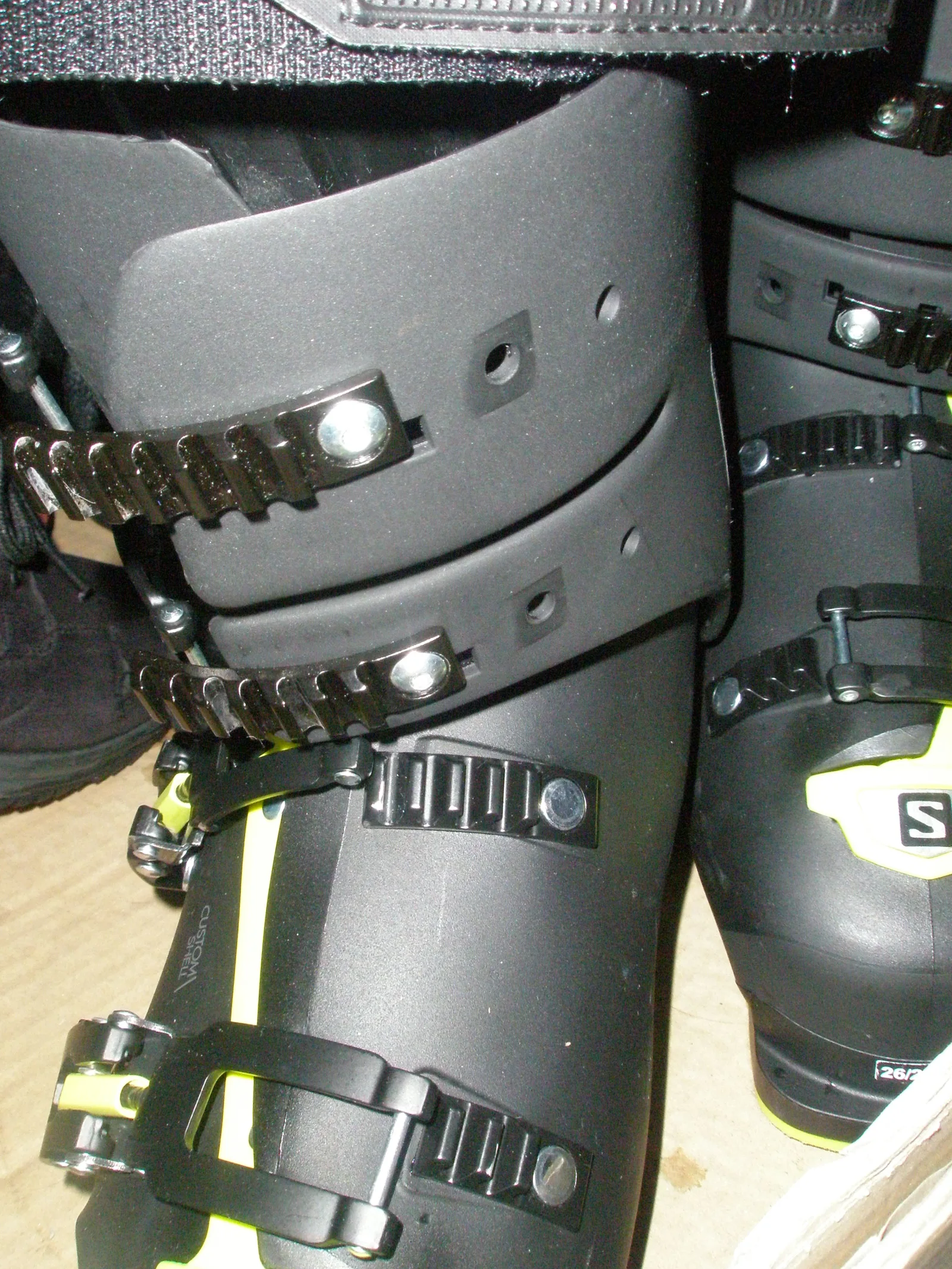
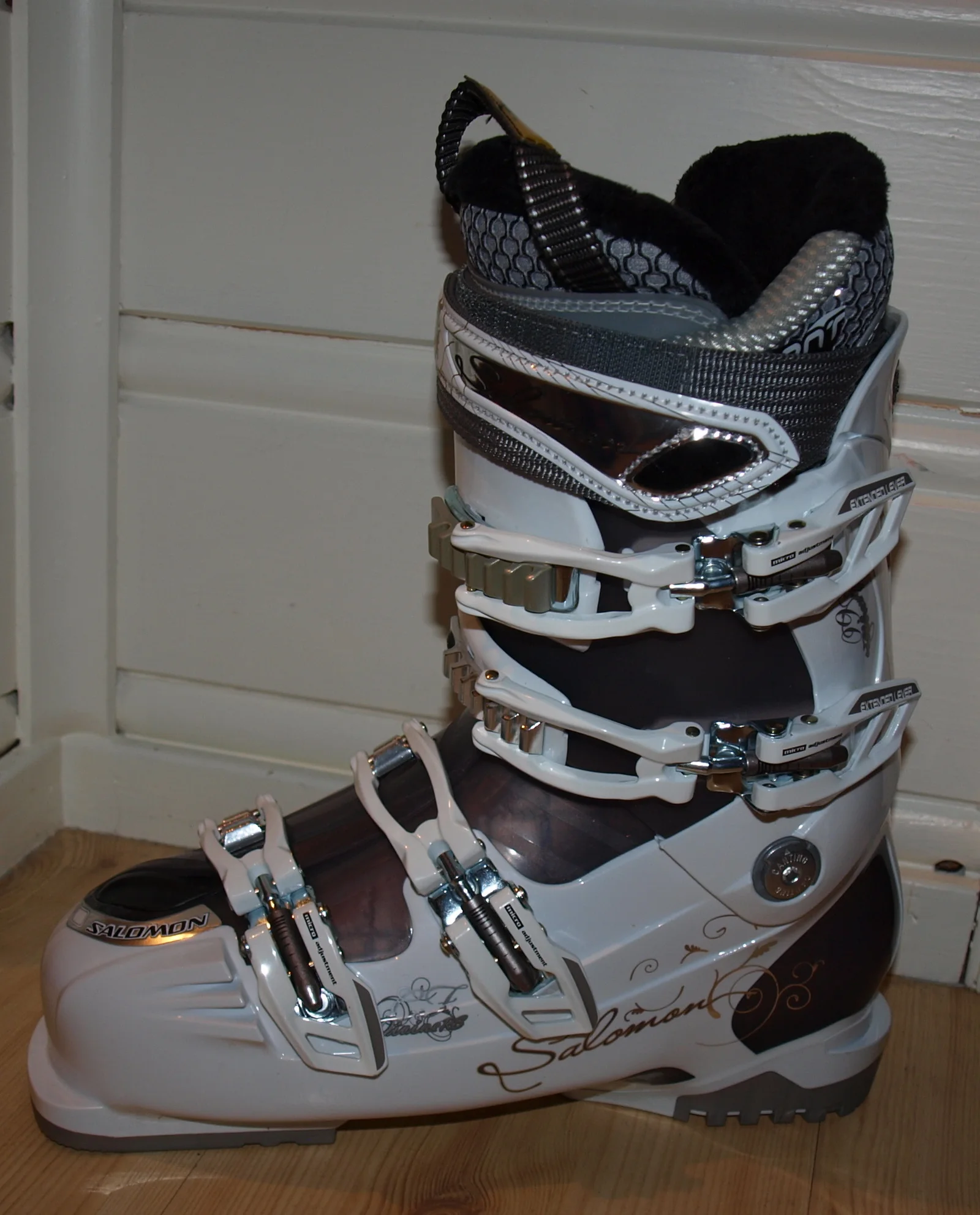
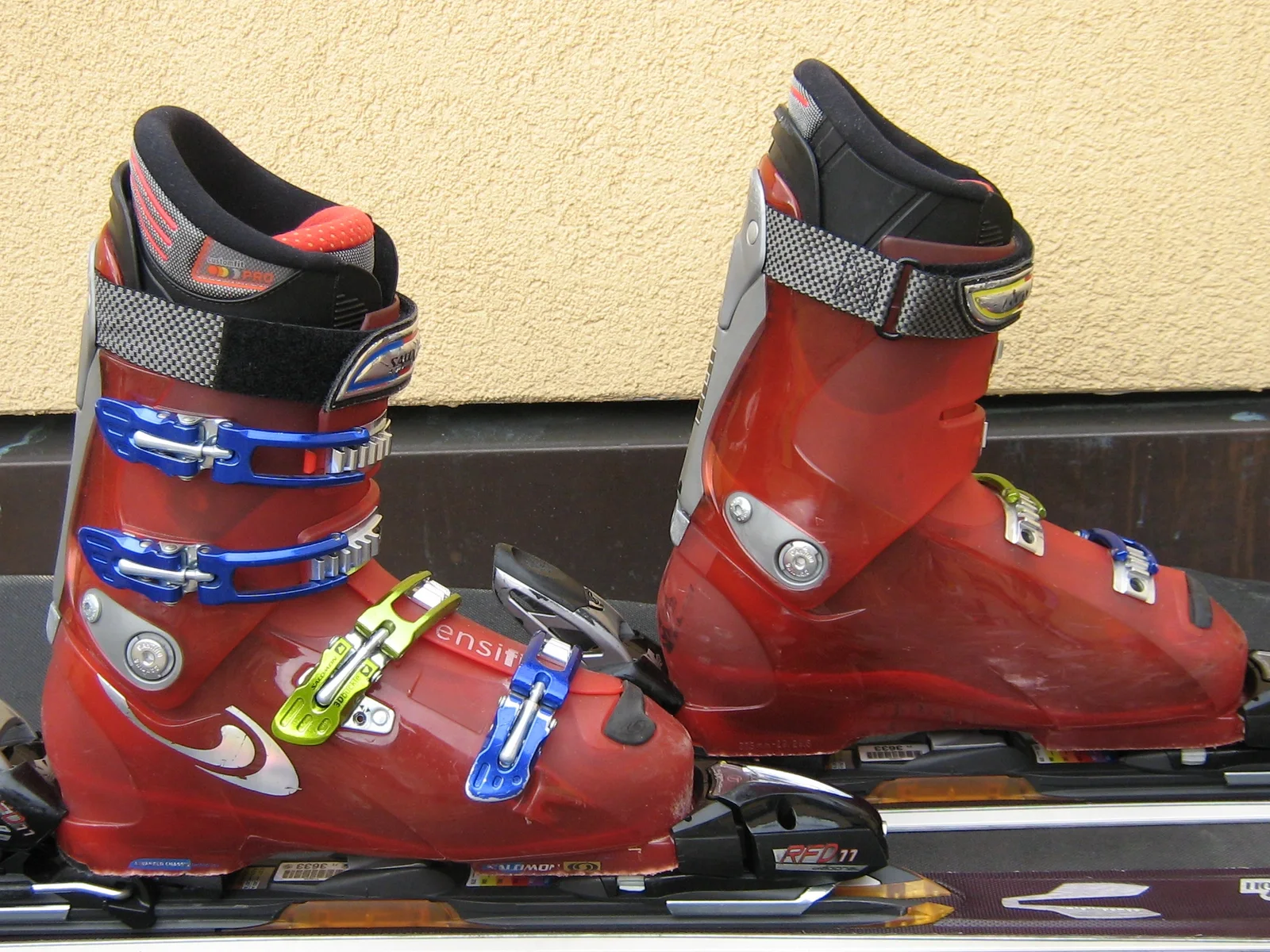
Give the retailer the exact model, version where known and the size-chart source you used. Ask which chart applies and what their fitting process and purchase terms include. If you already own equipment, bring the actual boots or clear identification photographs as requested by the service provider. HEAD’s guide recommends professional fitting; a worksheet cannot assess the complete foot, shell, liner or individual requirements. Record uncertainties such as an unreadable marking, changed sole component or unknown service history rather than guessing. The archival photographs here show real alpine shells, buckles and soles, but they do not depict the HEAD chart example or demonstrate approved adjustment, compatibility or current condition.
Keep the confirmed identity after purchase
Save the receipt, delivered model marking, applicable instructions and the outcome of the fitting conversation in one private equipment file. Keep a technician’s compatibility or service findings distinct from your own observations; do not use this article to adjust release settings, move hardware or modify a boot. Revisit the record when equipment or components change. The two 2010 photographs and the 2019 buckle photograph are credited historical equipment examples, not present-day offers or proof that their pictured combinations should be copied. The useful next step is a specific fitting or service enquiry with both labels correctly identified, followed by a record of what the supplier actually confirmed. The conceptual cover is AI-generated and is not a photograph of a named product.
Open official source ? Open official source ? Open official source ? Open official source ?