Compare a ski backpack by its actual compartments and intended use
Compare the actual storage, belt and stated mass fields of Dakine Poacher 22L and Heli 2.0 Pro 20L references. Nominal volume and carry-feature lists do not establish personal load limits or mountain readiness.
Updated:
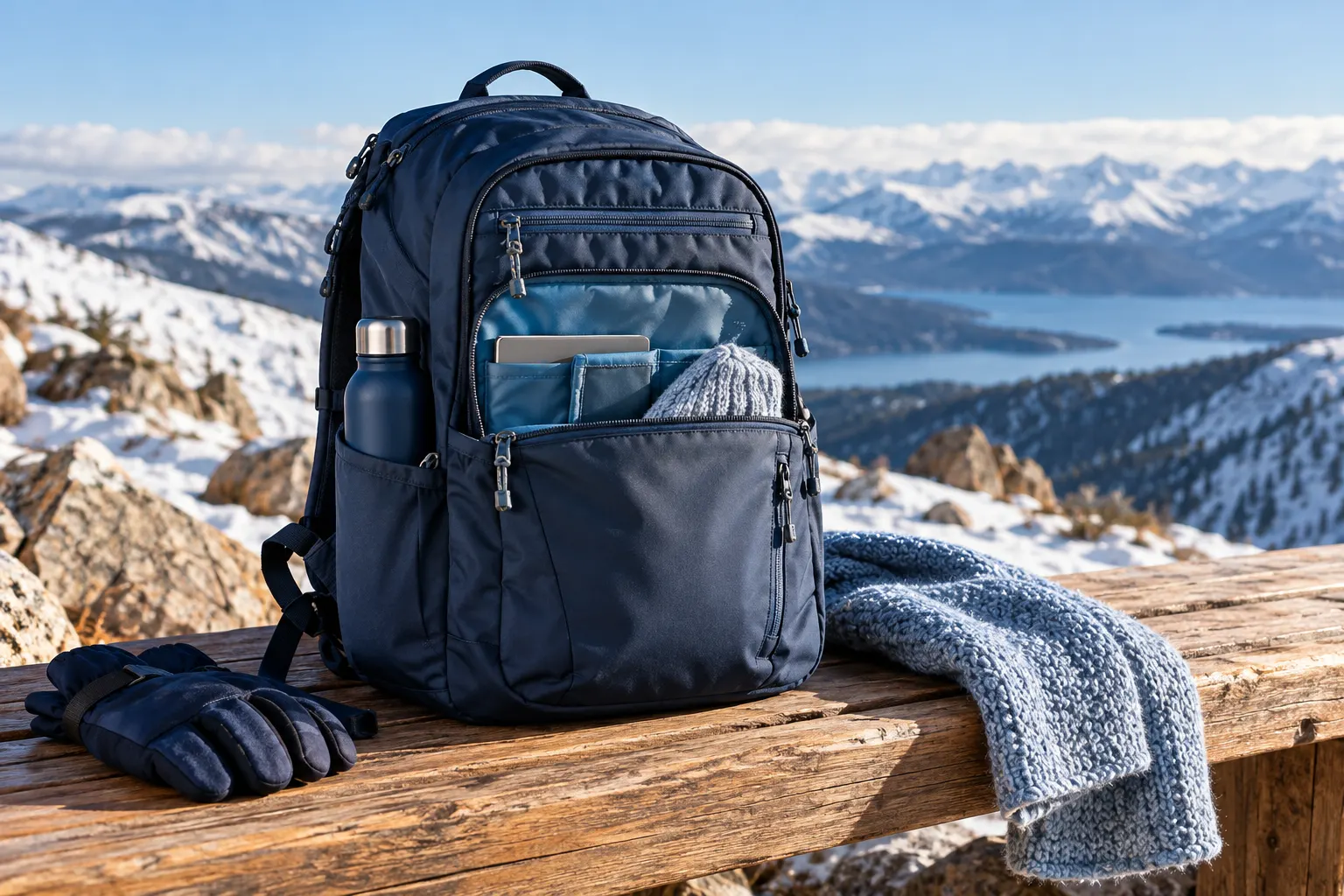
Two real packs, several different storage fields
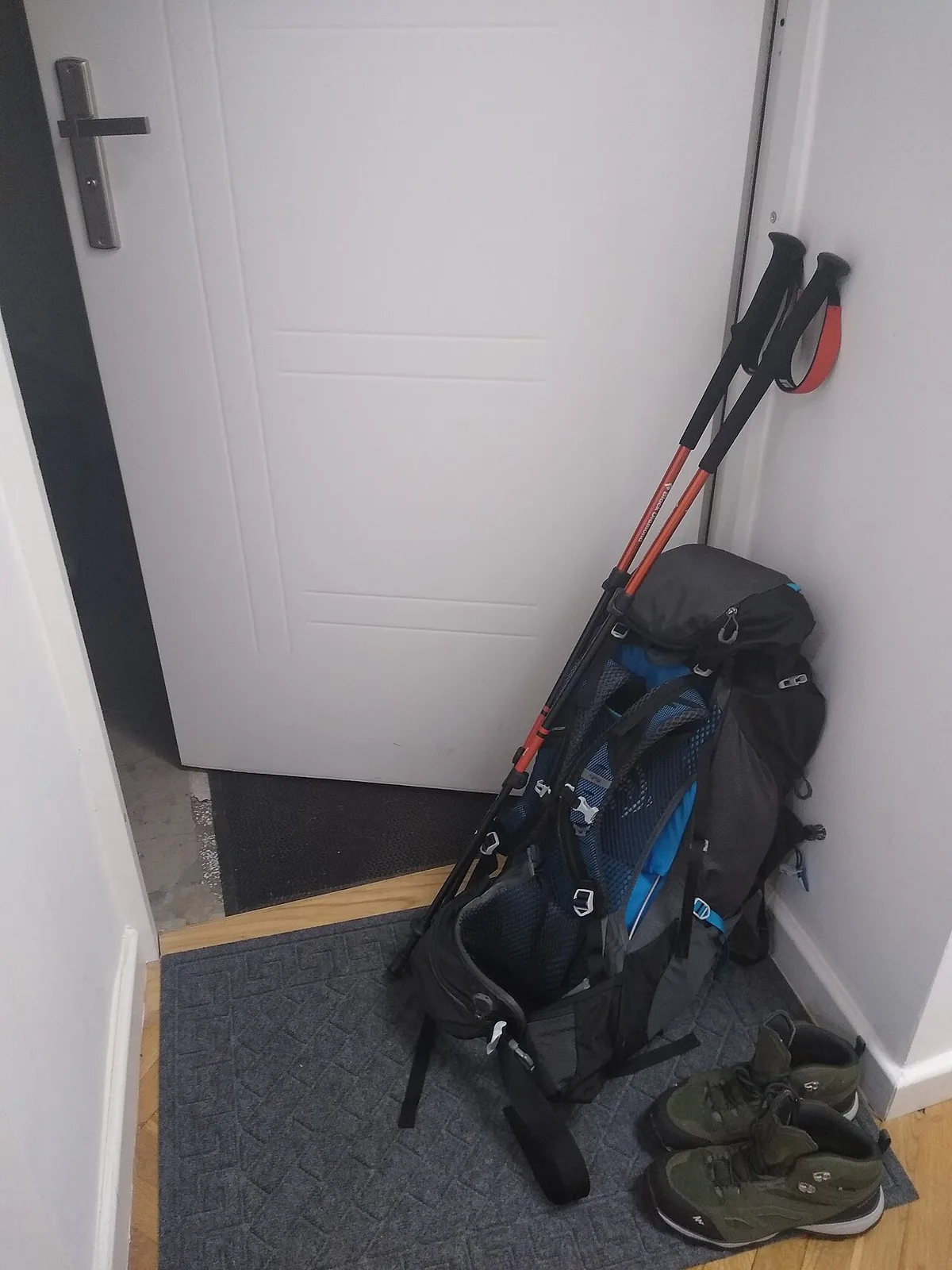
Dakine Poacher Backpack 22L Black and Heli 2.0 Pro Backpack 20L Black are actual snow-pack references with different stated masses, belt construction and helmet-storage descriptions. Their US manufacturer pages were checked on 28 October 2026. This comparison concerns those documented equipment features, not a route, hazard assessment or personal carrying approval. The real backpack photograph shows a hiking pack, trekking poles and shoes beside a door. It is a different product, useful for noticing that a pack and its separate equipment need distinct identities. It does not turn a hiking pack into a snow carry system or prove that any shown arrangement is suitable for skiing.
Dakine US Poacher 22L Black current pack specifications ? Dakine US Heli 2.0 Pro 20L Black pack specifications ? Qantas sporting equipment and ticket-specific baggage arrangements ?
Read litres, access and belt construction separately
Poacher's nominal designation is 22L; Heli 2.0 Pro's is 20L. The two-litre difference in their names does not show which irregular objects fit or establish a maximum load mass. Poacher explicitly lists back-panel zippered main access and a 38 mm padded hip belt with a side pocket. Heli 2.0 Pro lists internal and exterior quick-stash pockets and a 25 mm webbing hip belt with wings. Those are actual differences to investigate during a permitted trial, not measured comfort results. Ask the supplier to demonstrate access with your intended contents and to identify the precise version offered. Do not infer a pack's usable capacity by multiplying exterior dimensions as if it were an empty rectangular box.
| Field | Poacher 22L Black | Heli 2.0 Pro 20L Black |
|---|---|---|
| Nominal name / listed mass | 22L /1.54 kg | 20L /1.37 kg |
| Hip belt | 38 mm padded; side pocket | 25 mm webbing; wings |
| Helmet storage description | Deployable; dual position | Removable; lumbar stash pocket |
| Black body materials table | 100% recycled nylon | 97% recycled polyester; 3% polyester |
Equipment-carry descriptions need their actual components
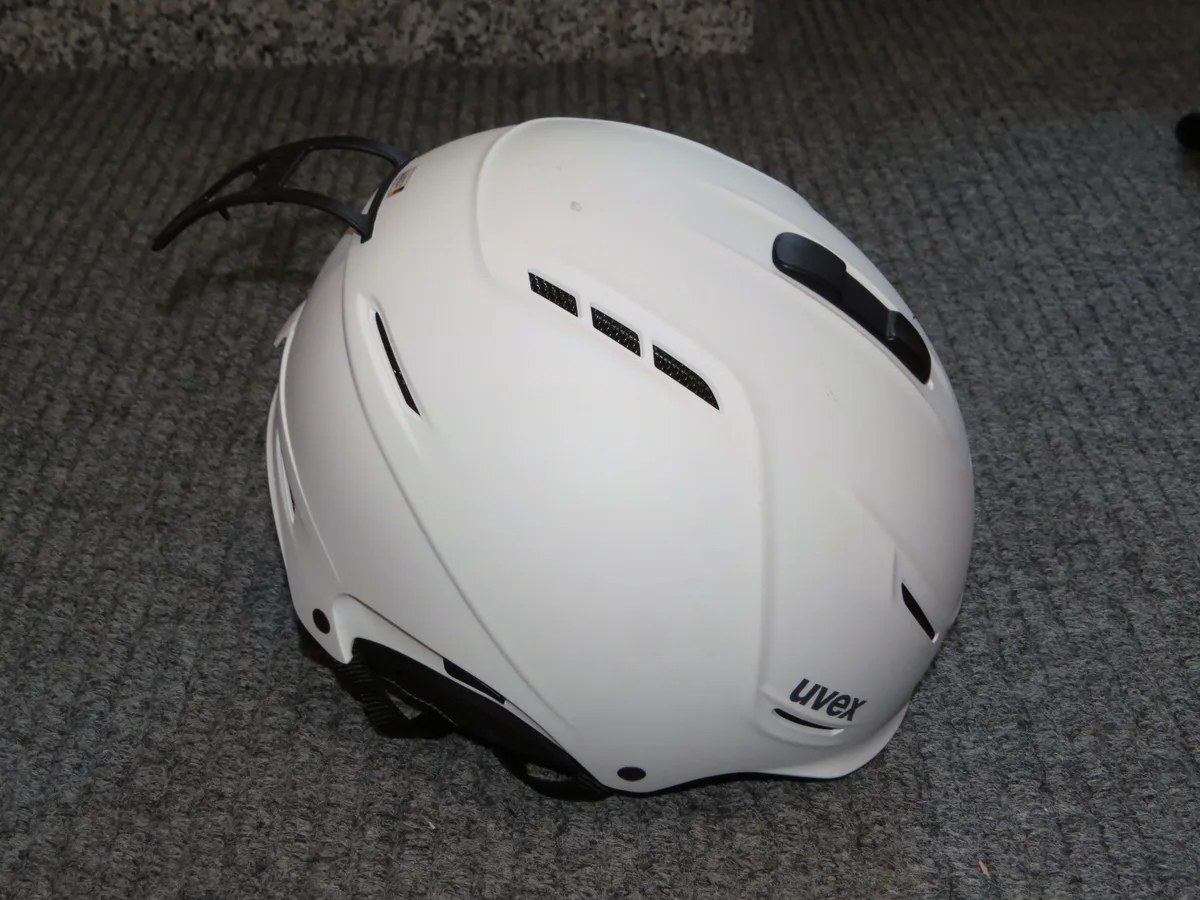
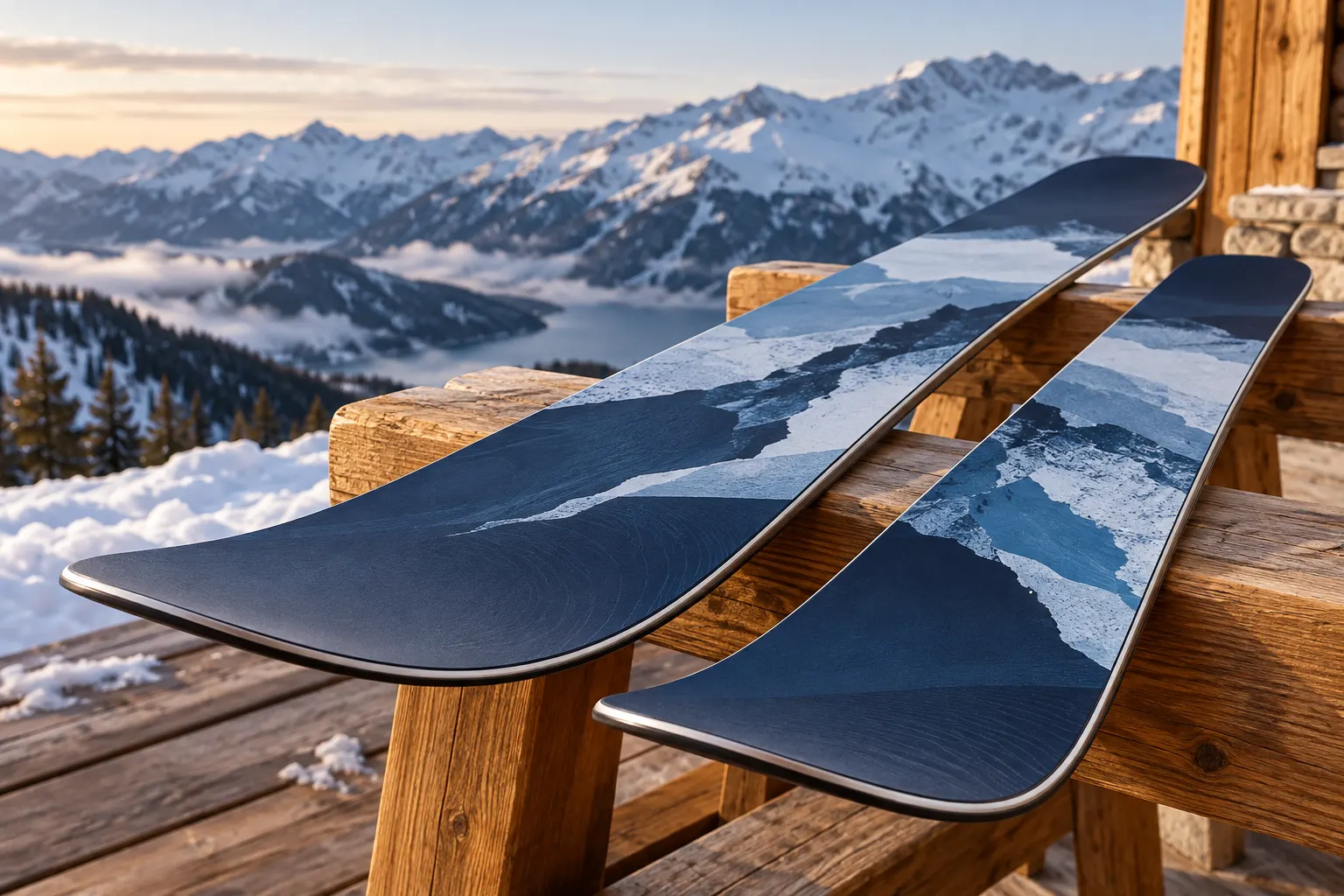
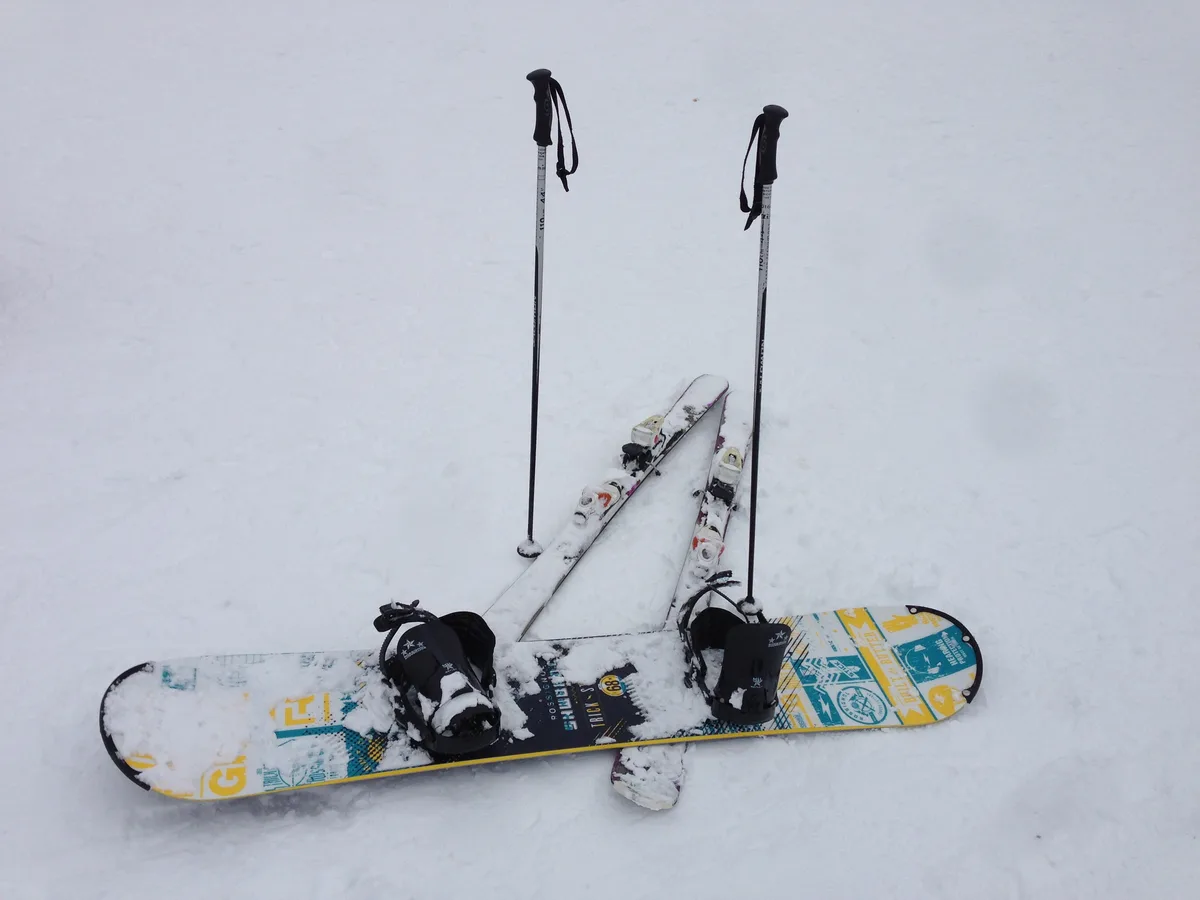
The Poacher page describes deployable helmet carry in two positions; Heli 2.0 Pro describes removable helmet carry with a stash pocket on the lumbar panel. Both list ski and snowboard carry formats, but a feature list is not an attachment procedure or proof that every board, ski or helmet is compatible. The Meribel equipment photograph makes the separate skis, board and poles visible; the Uvex helmet photograph identifies another real object relevant to a storage question. Neither image depicts the two compared packs. Use the actual pack's instructions and obtain qualified help when a carrying arrangement is uncertain. This guide gives no fastening, ascent, rescue or avalanche-equipment instructions.
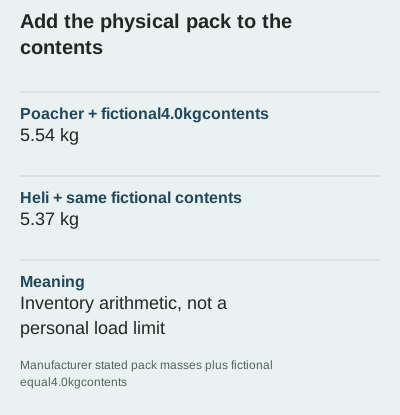
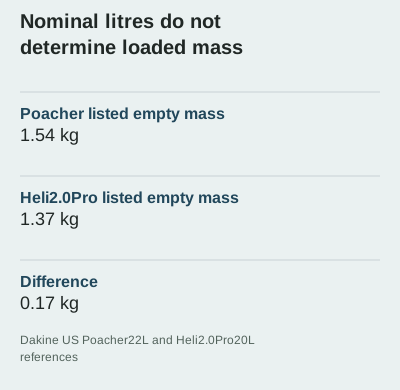
Compare the stated mass and material with their scope
The manufacturer lists Poacher at 1.54 kg and Heli 2.0 Pro at 1.37 kg, a difference of 0.17 kg. These are catalogue values for the linked references, not weights of a fully loaded pack. Poacher's materials table identifies its black body fabric as 100% recycled nylon, while Heli's materials table identifies its body as 97% recycled polyester and 3% polyester. Heli's separate feature wording is broader, so preserve the more specific composition table instead of silently harmonising the two descriptions. No abrasion or weather-resistance test is established by those percentages. For hypothetical equal 4.0 kg contents, the stated pack-plus-contents totals would be 5.54 kg and 5.37 kg; actual complete loads must be weighed.
Choose the documented enquiry, not a mountain-readiness score
If rear main-compartment access and the stated padded-belt arrangement matter, investigate the exact Poacher reference further; if the listed lighter pack mass and removable helmet carrier matter, investigate the exact Heli 2.0 Pro. Try the actual product with intended contents under the applicable guidance and confirm local return conditions. Neither nominal litres, a storage pocket nor a rescue-related feature establishes that a person is equipped for a particular route or weather. Current Australian prices, stock and maximum acceptable personal loads are not verified here. For travel, also check the actual operating carrier and fare conditions: a pack manufacturer cannot grant a baggage allowance. Save the precise model documentation and unresolved supplier answers with the purchase record.
Open official source ? Open official source ? Open official source ?